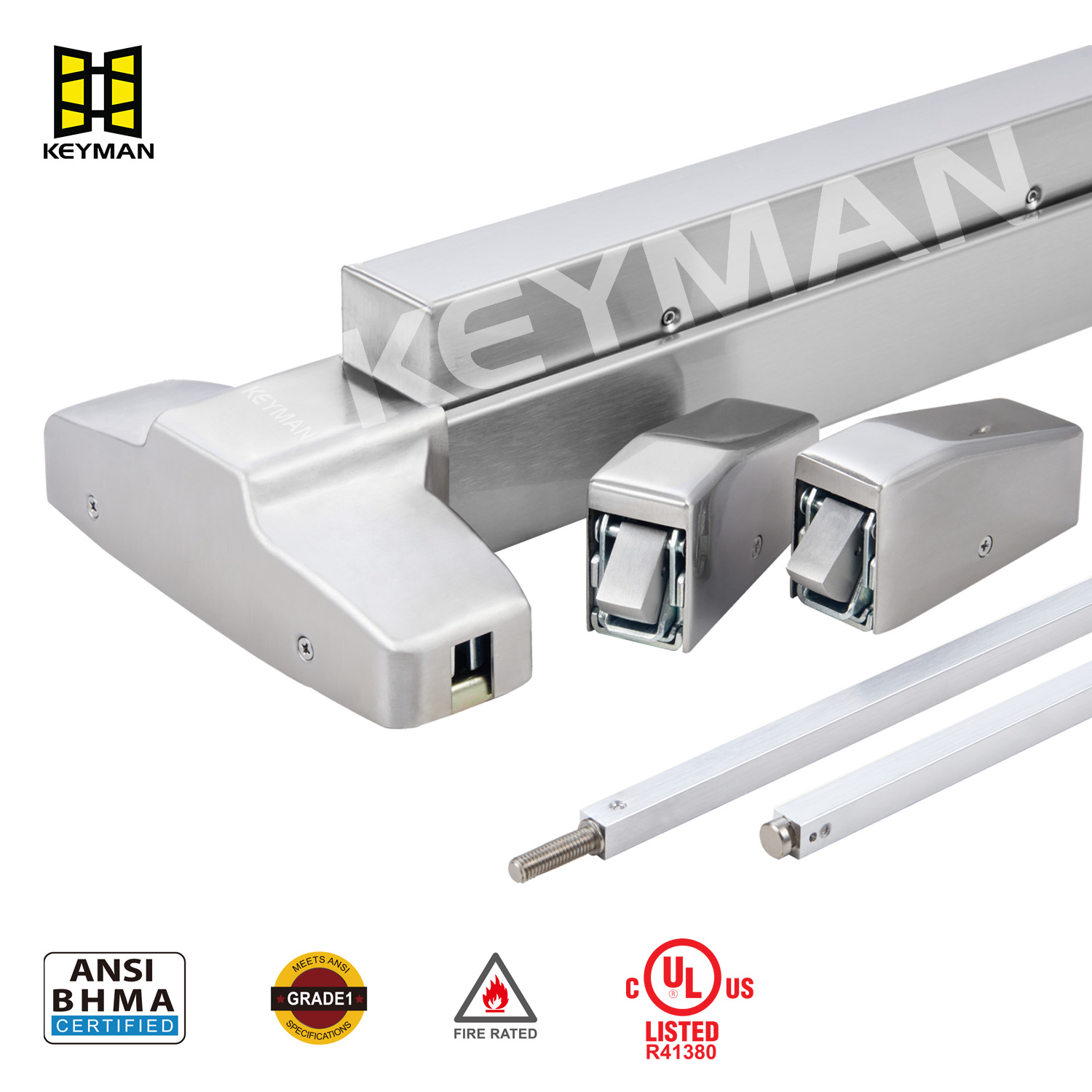
Building safety codes can feel complex, but understanding when to use specific safety features is crucial for protecting lives. One of the most important of these features is panic hardware, also known as a door exit device. This hardware is designed to allow for fast and easy egress during an emergency, a critical function in crowded spaces.
This guide will explain what panic hardware is, why it's essential, and outline the specific building code requirements that determine when it must be installed. By understanding these regulations, you can ensure your building is not only compliant but also provides the highest level of safety for its occupants.
What is Panic Hardware?
Panic hardware is a type of door latching mechanism that unlatches a door when a push bar or pad is pressed. Unlike traditional doorknobs or levers that require twisting or turning, a door exit device allows someone to open the door by simply pushing against it. This single, fluid motion is intuitive and effective, especially in a panic situation where fine motor skills may be compromised.
There are two main types of panic hardware:
· Touchpad Style: This is a small, horizontal pad located in the center of the door.
· Crossbar Style (or Push Bar): This is a bar that extends across most of the door's width.
Both styles serve the same fundamental purpose: to provide a quick and obstruction-free exit path during an emergency. The International Building Code (IBC) and the National Fire Protection Association (NFPA) set the standards for where and when this hardware is necessary.
The Key Difference: Panic Hardware vs. Fire Exit Hardware
While the terms are often used interchangeably, there is a technical distinction between "panic hardware" and "fire exit hardware."
· Panic Hardware: This hardware is certified for use on doors that are not fire-rated. It is tested to ensure it allows for safe egress under emergency conditions.
· Fire Exit Hardware: This hardware is specifically designed and tested for use on fire-rated door assemblies. In addition to meeting egress standards, it must also withstand high temperatures and maintain the integrity of the fire barrier for a specific duration (e.g., 60, 90, or 180 minutes). It is built with materials that won't melt or fail during a fire, preventing the spread of flames and smoke.
Using standard panic hardware on a fire-rated door would compromise the door's fire resistance and violate building codes. Always check the door's rating to determine if you need fire exit hardware.

When is Panic Hardware Required by Code?
Building codes dictate that panic hardware is mandatory in areas with high occupant loads and specific use cases where rapid evacuation might be necessary. The primary regulations come from the IBC and the NFPA 101, Life Safety Code.
According to these codes, a door exit device is required on egress doors in the following situations:
1. High Occupant Load
The most common trigger for requiring panic hardware is the number of people a space is designed to hold. Panic hardware is generally required for rooms or areas with an occupant load of 50 or more people.
This rule applies to several "Assembly" and "Educational" occupancy types, including:
· Assembly Occupancies (A): Theaters, concert halls, restaurants, nightclubs, and auditoriums.
· Educational Occupancies (E): Schools, universities, and daycare centers.
The calculation for occupant load is based on the room's function and square footage. For example, an assembly area with concentrated seating might have a higher occupant load per square foot than an open-plan office.
2. High-Hazard Occupancies
Certain buildings are classified as "High-Hazard" occupancies due to the nature of the materials stored or used within them. These spaces present a higher risk of fire, explosion, or the rapid release of toxic fumes.
In these environments, rapid egress is paramount, regardless of the occupant load. Therefore, panic hardware is required on exit doors serving any room or area in High-Hazard (H) occupancy groups, even if the occupant load is less than 50. This includes facilities like chemical plants, paint shops, and buildings storing flammable liquids.
3. Electrical Rooms
A specific requirement was added in later code editions to protect personnel working in electrical rooms. Panic hardware is required on doors serving rooms that contain electrical equipment if the room is over a certain size or the equipment has a high amperage rating.
Specifically, the code calls for panic hardware on doors within 25 feet of the required working space for electrical equipment that is:
· Rated 800 amperes or more.
· Contained in a switchboard or switchgear more than 6 feet wide.
This rule ensures that a technician who suffers an electric shock can fall or push against the door to exit quickly, without needing to use their hands to operate a knob or lever.
Exceptions and Special Conditions
While the rules above cover most scenarios, there are a few exceptions and additional points to consider:
· Main Entrance Doors in Assembly Occupancies: In some assembly buildings, the main entrance/exit may be permitted to have a key-operated lock from the outside, provided it is readily openable from the inside without a key or special knowledge. However, if the occupant load is high, this entrance will likely still require a door exit device.
· Small Rooms: Individual rooms within a larger facility that have a low occupant load (e.g., a small office within a large school) do not typically require panic hardware on their own doors, but the main exit doors for the building or floor would.
· Locked Doors: In no case should an exit door requiring panic hardware be equipped with a lock or device that prevents its use during an emergency. Any additional locks must not interfere with the single-motion operation of the panic bar.
Prioritizing Safety and Compliance
Installing panic hardware is more than just a matter of following regulations; it's a fundamental step in creating a safe environment. In a fire, active shooter situation, or other emergency, seconds can mean the difference between life and death. A properly installed door exit device ensures that an escape route is always accessible, even in the midst of chaos.
For building owners, facility managers, and contractors, staying current with IBC and NFPA codes is essential. If you are unsure whether your building requires panic hardware, consult with a certified door hardware specialist or your local fire marshal. They can help you assess your property's specific needs and ensure you are fully compliant and prepared for any emergency.
panic hardware
Door Exit Device
Panic Bar


KEYMAN is Your Choice Of Security!
If you have any questions regarding our products or services, please leave your details and our team will respond to you.
: +86-13823964887
: +86-13823964887