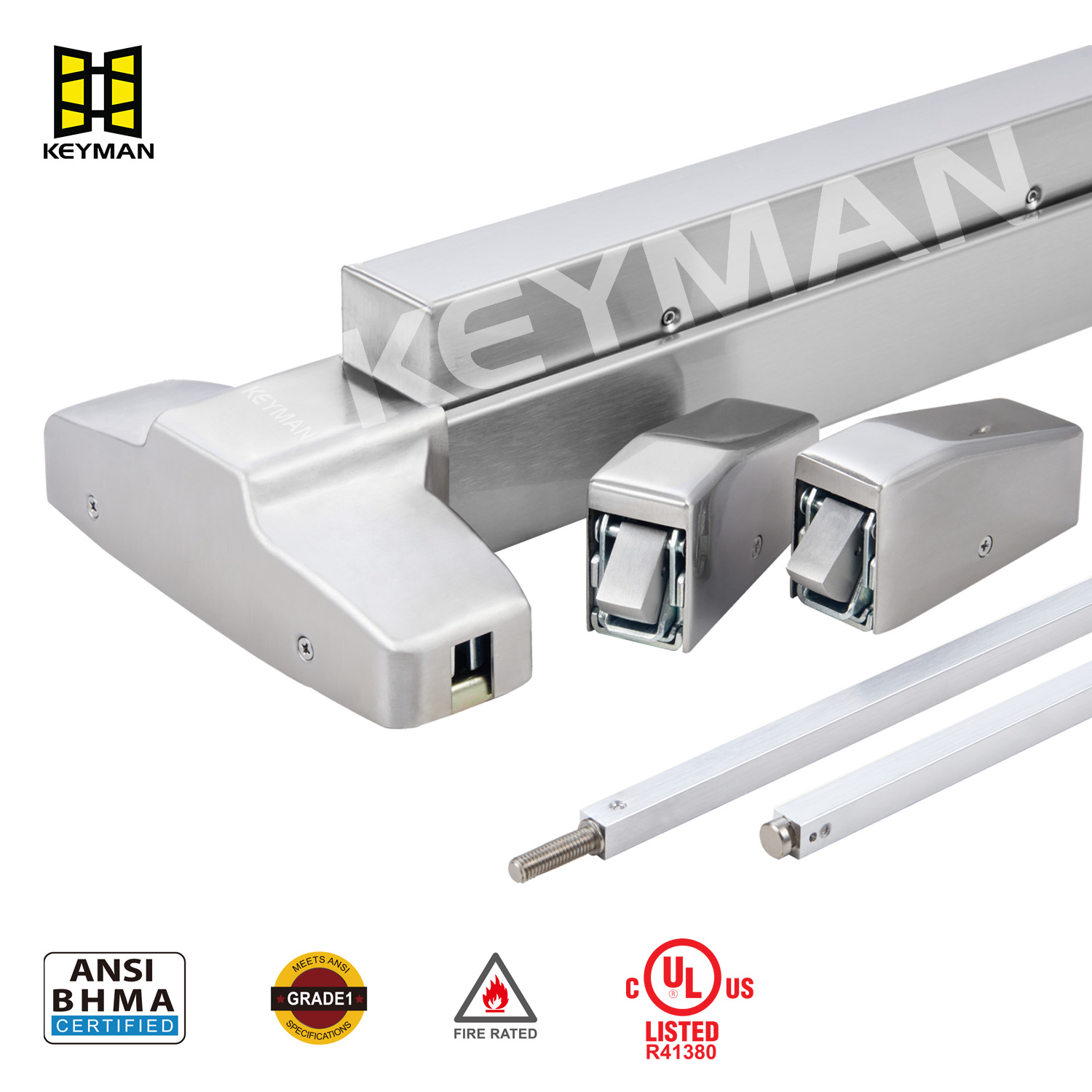
When it comes to the safety and security of a commercial building, every detail matters. Among the most critical components are the exit devices on doors, commonly known as panic bars or crash bars. These mechanisms are designed to allow for quick and easy egress during an emergency. While they might all look similar at a glance, there are distinct types, each with its own specific application and hardware.
Two of the most common types are rim panic devices and mortise panic devices. Choosing the correct one is not just a matter of preference; it’s a crucial decision that impacts building code compliance, security, and user safety. Understanding the fundamental differences between these two systems—how they are installed, how they latch, and where they are best used—is essential for facility managers, contractors, and building owners. This guide will clarify the distinction between rim panic and mortise panic bars to help you make an informed decision for your property.
What is a Panic Bar?
Before comparing rim and mortise types, it's helpful to understand what a panic bar is and why it's so important. A panic bar (or exit device) is a door-mounted hardware mechanism that unlatches a door when a push bar or pad is depressed. Its primary purpose is to provide fast and unencumbered exit for a large number of people during an emergency, such as a fire.
These devices are required by building and fire codes in many commercial and public buildings, particularly in high-occupancy areas or on designated fire exit doors. The core principle is that anyone, regardless of their familiarity with the building, can escape quickly without needing a key, special knowledge, or fine motor skills.
Rim Panic Devices Explained
A rim panic device is one of the most common and straightforward types of exit hardware. The defining characteristic of a rim device is that both the panic hardware and the latching mechanism are surface-mounted directly onto the interior face of the door.
How it Works
When you push the bar on a rim panic device, it retracts a latch bolt located at the edge of the device's housing. This latch engages with a surface-mounted strike plate on the door frame (or jamb). The entire mechanism—the bar, the chassis, and the latch—is contained in a single unit on the "push" side of the door.
Key Features:
· Surface-Mounted: The entire device, including the latch, is installed on the interior surface of the door. No major modifications to the door itself are needed, aside from drilling mounting holes.
· Simple Latching: It uses a single latch point that secures into a strike plate on the door frame.
· Ease of Installation: Because it doesn't require a large pocket to be cut into the door, installation is generally faster and less complex than with a mortise device.
Applications and Use Cases
Rim panic devices are incredibly versatile and can be used on a wide variety of door types, including wood, hollow metal, and aluminum doors. They are an excellent choice for:
· Single Doors: They are the standard for single-door applications where a simple, reliable exit device is needed.
· Double Doors (with a Mullion): On a pair of doors, a rim device can be used on each leaf, latching into a removable or fixed mullion in the center of the frame.
· Retrofitting: Their surface-mounted design makes them ideal for upgrading existing doors that weren't originally prepared for a panic device.
Pros and Cons of Rim Panic Devices
Pros:
· Cost-Effective: Generally less expensive than mortise panic bars.
· Simple to Install: Reduces labor time and costs.
· Durable and Reliable: The straightforward mechanism has fewer complex parts, leading to a long service life.
· Versatile: Compatible with many door materials and types.
Cons:
· Security: While secure, the surface-mounted latch may be considered slightly less robust than a mortise lock body housed within the door.
· Aesthetics: The visible latch and strike plate may be less streamlined than the concealed components of a mortise lock.

Mortise Panic Bar Devices Explained
A mortise panic bar offers a more integrated and often more secure solution. The key difference lies in the latching mechanism. Instead of a surface-mounted latch, a mortise panic bar utilizes a mortise lock body that is installed inside a pocket, or "mortise," cut into the edge of the door.
How it Works
When the panic bar is pushed, it activates an internal mechanism that retracts the latch bolt and deadlatch housed within the mortise lock body inside the door. This lock body functions similarly to a standard commercial mortise lock, providing a very secure latching point. The strike plate is installed in the door frame, just like with a typical keyed lock.
Key Features:
· Concealed Lock Body: The main locking mechanism is hidden within the door, offering a cleaner look and enhanced security.
· Mortise Lock Functionality: The lock body contains both a latch bolt for primary latching and often a deadlatch or deadbolt for added security.
· Door Preparation Required: The door must have a mortise pocket prepared to accept the lock body, which requires more precise and intensive installation.
Applications and Use Cases
A mortise panic bar is often specified for applications where aesthetics, high security, and durability are top priorities. They are commonly found in:
· High-Traffic Areas: Institutions like schools, hospitals, and airports often use mortise devices due to their durability.
· Doors with Exterior Trim: They easily accommodate exterior levers or handles with key cylinders, allowing for keyed entry from the outside while maintaining free egress from the inside.
· New Construction: Architects often specify mortise panic bars in new projects where doors can be prepped at the factory.
Pros and Cons of a Mortise Panic Bar
Pros:
· Higher Security: The mortise lock body is protected within the door, making it more resistant to tampering and forced entry.
· Clean Aesthetics: With the latching mechanism concealed, the door has a more streamlined, professional appearance.
· Durability: Mortise locks are known for their heavy-duty construction and ability to withstand significant use and abuse.
· Functionality: Easily integrates with access control systems and offers various trim functions (e.g., storeroom, classroom).
Cons:
· Higher Cost: Both the device and the installation labor are typically more expensive.
· Complex Installation: Requires a specific mortise pocket in the door, making it difficult to retrofit on unprepared doors.
· Limited to Certain Door Types: Primarily used on wood and hollow metal doors that are thick enough to accommodate the mortise pocket.
Key Differences at a Glance
Feature | Rim Panic Device | Mortise Panic Bar |
|---|---|---|
Latching Mechanism | Surface-mounted latch and strike. | Mortise lock body installed inside the door. |
Installation | Simple, surface-mounted. Less door prep. | Complex, requires a pocket cut into the door. |
Security | Good | Excellent, more resistant to tampering. |
Aesthetics | Visible latch and strike. | Concealed lock body, cleaner look. |
Cost | Less expensive. | More expensive. |
Best For | Retrofits, single doors, general use. | High-security areas, high-traffic doors. |
Making the Right Choice for Your Building
Your decision between a rim panic and a mortise panic bar will depend on your specific needs, budget, and door conditions.
· Choose a rim panic device if you are retrofitting an existing door, working with a tight budget, or need a reliable, straightforward solution for a standard exit door.
· Choose a mortise panic bar if security is your top concern, the door is in a high-traffic or abuse-prone area, or you desire a cleaner, more integrated aesthetic for a new construction project.
Ultimately, both rim and mortise panic devices are designed to save lives by providing safe and reliable egress. By understanding their distinct features and applications, you can ensure your facility is not only compliant with safety codes but also equipped with the right hardware for long-term performance and security.
Mortise Panic Bar
mortise lock panic bar
panic bar mortise lock


KEYMAN is Your Choice Of Security!
If you have any questions regarding our products or services, please leave your details and our team will respond to you.
: +86-13823964887
: +86-13823964887