
Author: Site Editor Publish Time: 09-12-2025 Origin: Site


When it comes to building safety, few components are as critical as emergency exits. Panic doors, also known as crash bars or push bars, are designed to provide a fast and unobstructed exit during an emergency. A common question that arises is: do panic doors lock behind you? The answer is crucial for understanding how these doors balance security with safety.
This article will explore the mechanics of the panic door lock, explain how these doors function from both the inside and outside, and detail the various types of hardware available. By understanding these systems, building managers and safety officers can ensure their facilities are both secure and compliant with safety regulations.
A panic door is a type of door fitted with a mechanism that unlatches it when pressure is applied. This mechanism, typically a horizontal bar, allows people to open the door quickly and easily by simply pushing on it. The concept was developed in response to tragic events where people were trapped inside burning buildings because doors were locked or opened inward, creating a bottleneck.
The primary function of a panic door is to ensure that a large number of people can exit a building swiftly in an emergency situation like a fire, earthquake, or active threat. These doors are legally required in high-occupancy buildings such as schools, theaters, hospitals, and large commercial venues.
To understand if a panic door locks behind you, it's essential to grasp how the locking mechanism operates. Unlike a standard doorknob or lever, a panic bar is designed for one-way, egress-only operation by default.
From the inside, a panic door is always unlocked. Pushing the bar or pad retracts the latch, allowing the door to swing open. This mechanism is purely mechanical and designed to function even during a power outage. The core principle is "always free to exit," which is the foundation of fire safety and building codes. No keys, special knowledge, or fine motor skills are needed to operate the door from the interior.
The locking functionality of a panic door primarily applies to entry from the outside. This is where different types of hardware and configurations come into play. Most panic doors are designed to be locked from the exterior to prevent unauthorized entry while still allowing free egress from the interior.
So, do they lock behind you? Yes, in most configurations, a panic door will automatically lock from the outside once it closes. This ensures that while people can escape, unauthorized individuals cannot enter the building through the same exit, maintaining the building's security.
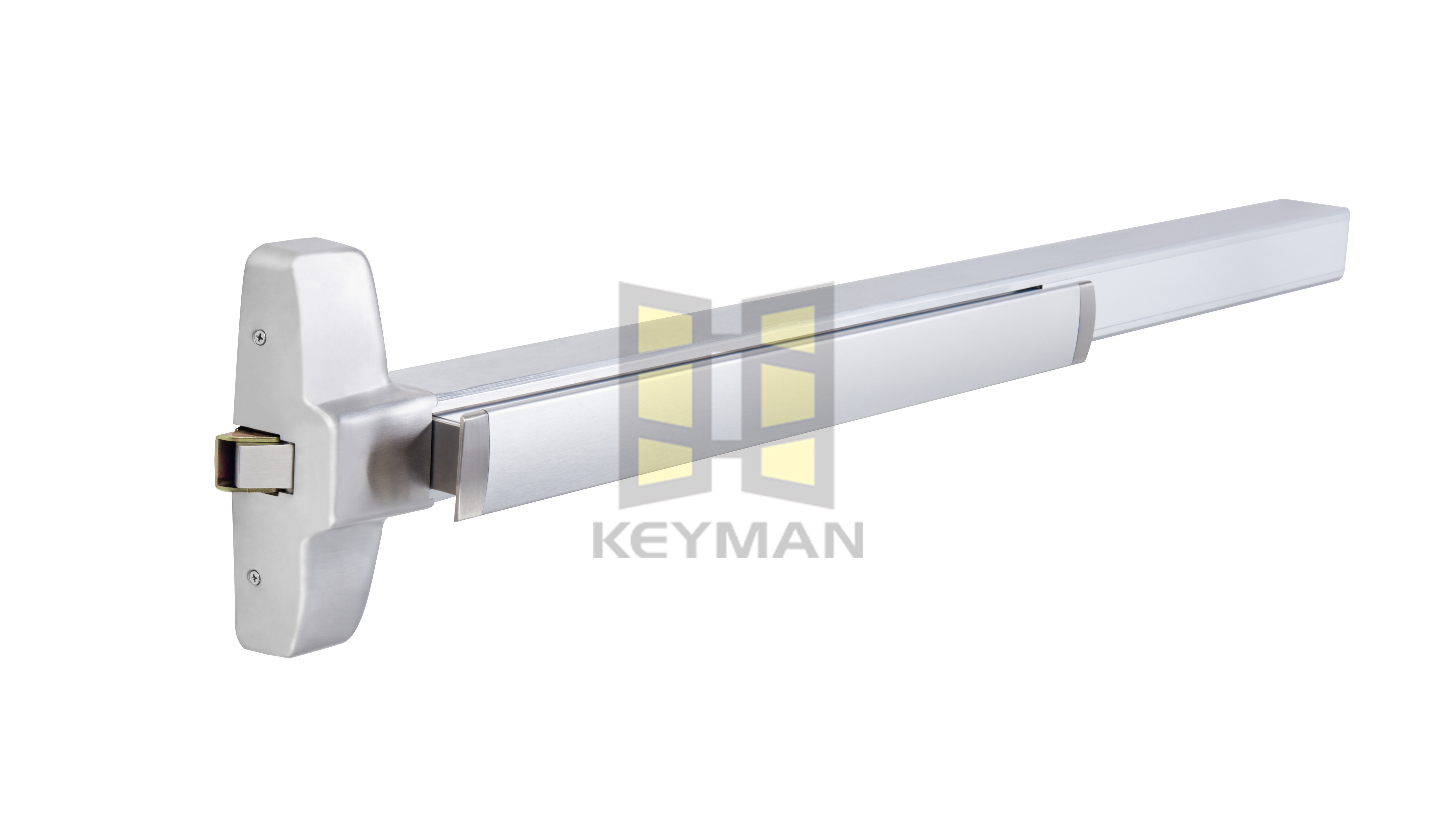
The exterior side of a panic door is fitted with what is known as "trim." The type of trim determines how, or if, the door can be opened from the outside. Here are the most common options:
The most basic configuration is an exit-only door. This type has no handle, knob, or key cylinder on the exterior. The outside of the door is a flat, blank surface.
Function: This door cannot be opened from the outside under any circumstances.
Use Case: Ideal for dedicated emergency exits in areas where external access is never required, such as the back of a retail store or a remote exit in a large warehouse. It offers maximum security against unauthorized entry through that specific door.
A dummy trim consists of a handle or lever on the outside that is rigid and does not operate the latch. It's essentially a pull handle.
Function: It allows someone to pull the door open from the outside, but only if the panic door lock is not engaged. This trim is often used on double doors where one door is active and the other is inactive until the panic bar is pushed.
Use Case: Commonly found on pairs of doors in commercial buildings where one door is used for regular traffic and the other is for emergency egress only.
This is one of the most common types of panic door lock trim. It features a key cylinder on the outside.
Function: The door remains locked from the outside at all times. A key is required to retract the latch and open the door from the exterior. Once the key is turned and the door is opened, it will re-lock automatically when it closes.
Use Case: Perfect for employee entrances, stairwell doors, and other access points where entry needs to be restricted to authorized key holders.
A passage function allows the door to be set to an "unlocked" state from the outside. This is typically done using a key.
Function: A key is used to "unlock" the exterior lever. Once unlocked, the lever can be used to open the door freely without a key, similar to a standard office or classroom door. The door can be later locked again using the key.
Use Case: Suitable for main entrances or high-traffic areas where the door needs to be accessible to the public during business hours but secured after hours.
With a storeroom function, the outside lever is always locked.
Function: A key must be used every single time to open the door from the outside. The lever does not stay unlocked.
Use Case: Used for secure areas like IT closets, storage rooms, or electrical rooms where access must be controlled on every entry, but free exit is still required.
1
Balancing the need for swift egress with robust security is a primary concern for facility managers. Modern panic door lock systems are designed to meet both needs effectively.
Security: By automatically locking from the outside, panic doors prevent unauthorized individuals from gaining entry during or after an emergency. This is particularly important in scenarios like lockdowns, where preventing entry is as critical as allowing exit.
Compliance: Building codes, such as those from the National Fire Protection Association (NFPA) and the International Building Code (IBC), strictly regulate the installation and operation of panic hardware. These codes mandate that panic doors must be openable from the inside with a single motion and without any special tools or knowledge.
It is vital for building owners to use certified hardware (UL Listed) and ensure it is installed correctly by a professional. Regular inspection and maintenance are also necessary to keep the panic door lock mechanisms in proper working order.
Panic doors are a critical safety feature, and understanding their locking mechanisms is key to maintaining a secure and compliant building. In most cases, these doors are designed to lock automatically from the outside, preventing unauthorized access while always allowing free and easy egress from the inside.
The specific functionality depends on the type of exterior trim installed, which can range from exit-only to key-controlled access. By choosing the right hardware for your needs, you can effectively balance safety and security. If you have any doubts about your current setup, consulting with a professional locksmith or a fire safety inspector is a wise decision to ensure the safety of everyone in your building.


