
When it comes to building safety, few components are as critical as the doors. They control access, provide security, and, most importantly, offer a quick escape route during an emergency. This is where panic door hardware comes into play. You've likely seen it a hundred times—the horizontal bar across an exit door in a movie theater, school, or mall. But a common question arises: can this essential safety feature be locked? The answer isn't a simple yes or no. Understanding how and when panic hardware can be locked is crucial for ensuring both security and compliance with safety codes.
This post will explore the locking mechanisms associated with panic door hardware. We will cover the different types of locks available, the regulations that govern their use, and how to strike the right balance between keeping a building secure and ensuring occupants can exit safely in an emergency.
What is Panic Door Hardware?
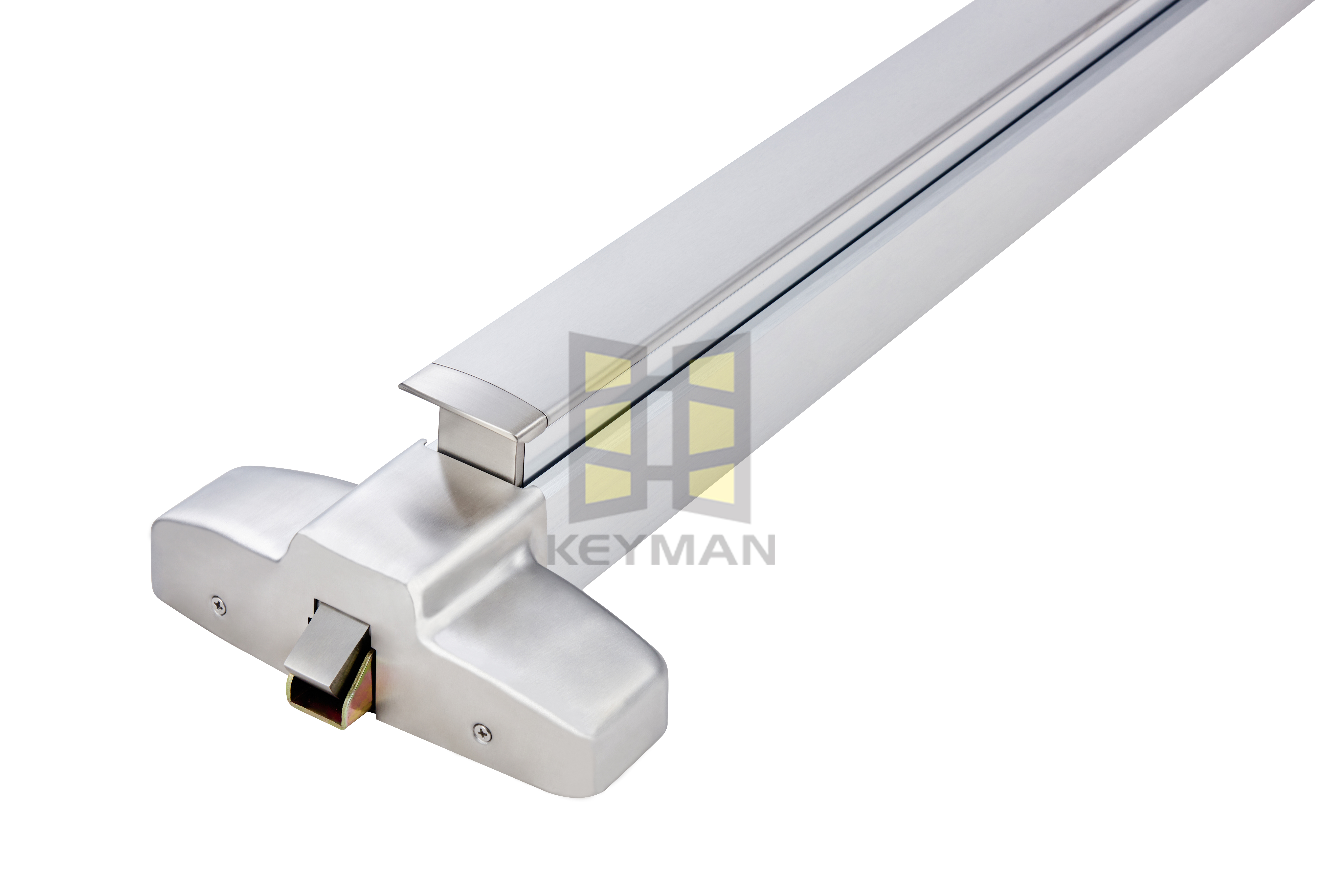
Before we explore the locking mechanisms, let's quickly define what panic door hardware is. Also known as a panic bar, exit device, or crash bar, it's a type of door-latching assembly designed for quick and easy egress during an emergency. A person can open the door by simply pushing on the bar or pad, which retracts the latch. This intuitive, single-motion operation is vital in a panic situation where people may not have the time or composure to operate a traditional doorknob or lever.
The primary purpose of this hardware is life safety. It ensures that even in a crowded, chaotic, or low-visibility scenario, a large number of people can exit a building quickly without needing special knowledge or fine motor skills.
The Dual Role: Security vs. Egress
The fundamental challenge with exit doors is balancing two opposing needs:
Security: Preventing unauthorized entry from the outside.
Egress: Allowing free and unobstructed exit from the inside.
This is where the confusion about locking panic door hardware often begins. While the hardware must always allow free egress from the inside, it can be configured to control access from the outside. The key principle is that no matter what locking mechanism is used on the exterior, it must never prevent the door from being opened from the inside by pushing the panic bar.
Locking Mechanisms for Panic Door Hardware
So, how can you lock a door equipped with a panic bar? There are several options available, each designed for different security needs while adhering to strict safety codes.
Keyed Locks on the Exterior
The most common way to secure a door with panic door hardware is by using a lock on the exterior side. This is typically achieved with an outside lever trim or thumbpiece trim that can be locked or unlocked with a key.
How it works: When the exterior lever is locked, it cannot be turned to retract the latch, preventing entry from the outside. However, the panic bar on the inside remains fully functional. Pushing the bar will always retract the latch and open the door, regardless of the exterior lock's status.
Common Applications: This is standard for main entrances, rear exits, and any door that needs to be secured from the outside after hours while still allowing occupants to leave.
1
Keyed Cylinder Dogging
"Dogging" is a term specific to panic door hardware. It refers to the action of holding the latch in a retracted position. When a panic bar is dogged, the door becomes a simple "push/pull" door. The latch is held back, so the door is unlatched and can be opened from either side without operating the panic bar or an exterior handle.
How it works: A key, typically a small Allen key (hex key) or a standard cylinder key, is inserted into a mechanism on the panic bar itself. Turning the key engages the dogging feature, holding the latch inside the device. To secure the door, you simply undog it, allowing the latch to project and secure the door.
Common Applications: This is frequently used for main entrances of public buildings like schools or retail stores. The doors are dogged open during business hours to allow easy entry and exit, and then undogged at the end of the day to secure the building. The exterior lever remains locked, so only keyholders can enter.
1
Electrified Options for Access Control
For more advanced security, panic door hardware can be integrated with electronic access control systems. These electrified options offer greater control and flexibility.
Electric Latch Retraction (ELR): ELR devices use an internal motor or solenoid to retract the latch when signaled by an access control system (like a card reader, keypad, or remote button). This allows authorized entry from the outside. When power is removed, the latch extends, securing the door. The panic bar on the inside always allows mechanical egress.
Electrified Trim: Similar to a standard keyed lever, electrified trim has a lever on the outside that is controlled electronically. The lever is normally locked. When an authorized credential is presented, the access control system unlocks the lever, allowing it to be turned to open the door. Egress is always possible from the inside.
Delayed Egress: In certain facilities, like hospitals or airports, it might be necessary to briefly delay an exit to prevent theft or unauthorized departure. Delayed egress panic hardware will sound an alarm and keep the door locked for a short, code-approved period (usually 15 or 30 seconds) after the bar is pushed. After this delay, the door unlocks. These systems have strict code requirements and are not suitable for all buildings.
What is Prohibited by Code?
While there are many approved ways to lock panic hardware from the outside, there are several methods that are strictly prohibited by building and fire codes because they compromise life safety. You should never add a secondary lock that impedes egress.
Prohibited locking devices include:
Deadbolts: A separate deadbolt that requires a key or thumbturn to unlock from the inside.
Chains: A chain lock that must be manually unhooked.
Slide Bolts: Any manually operated slide bolt.
Padlocks: Using a padlock and hasp to secure the door.
In essence, any device that requires a separate action, a key, or special knowledge to operate from the inside is a violation of life safety codes. The principle of single-motion egress is paramount.
Striking the Right Balance
Choosing the right locking solution for your panic door hardware involves assessing your facility's specific needs.
For a simple retail back-door, a standard panic bar with a keyed exterior lever might be sufficient.
For a school's main entrance, a panic bar with cylinder dogging provides convenience during the day and security at night.
For a corporate office with multiple employees, an electrified panic bar integrated with a card access system offers the best combination of security, convenience, and traffic monitoring.
Always consult with a qualified door hardware specialist or a life safety expert to ensure your chosen solution is not only effective for security but also fully compliant with local building codes, fire codes (like NFPA 101), and the Americans with Disabilities Act (ADA).
Your Key Takeaways
The answer to "Can panic door hardware be locked?" is a qualified yes. It can be locked from the outside to prevent unauthorized entry, but it must never be locked in a way that prevents safe and easy egress from the inside.
The key principles to remember are:
Free Egress: The primary function of panic hardware is to allow people to exit easily in an emergency. This function can never be compromised.
Single Motion: Opening the door from the inside must be achievable with a single push of the panic bar.
No Secondary Locks: Never add deadbolts, chains, or padlocks that would interfere with egress.
Compliance is Crucial: Always adhere to local, state, and national building and fire codes.
By understanding the available locking options and the strict regulations that govern them, you can effectively secure your building without sacrificing the safety of its occupants.
Panic Door Hardware
Panic Door Lock
fire panic bar


KEYMAN is Your Choice Of Security!
If you have any questions regarding our products or services, please leave your details and our team will respond to you.
: +86-13823964887
: +86-13823964887


