
TL;DR:
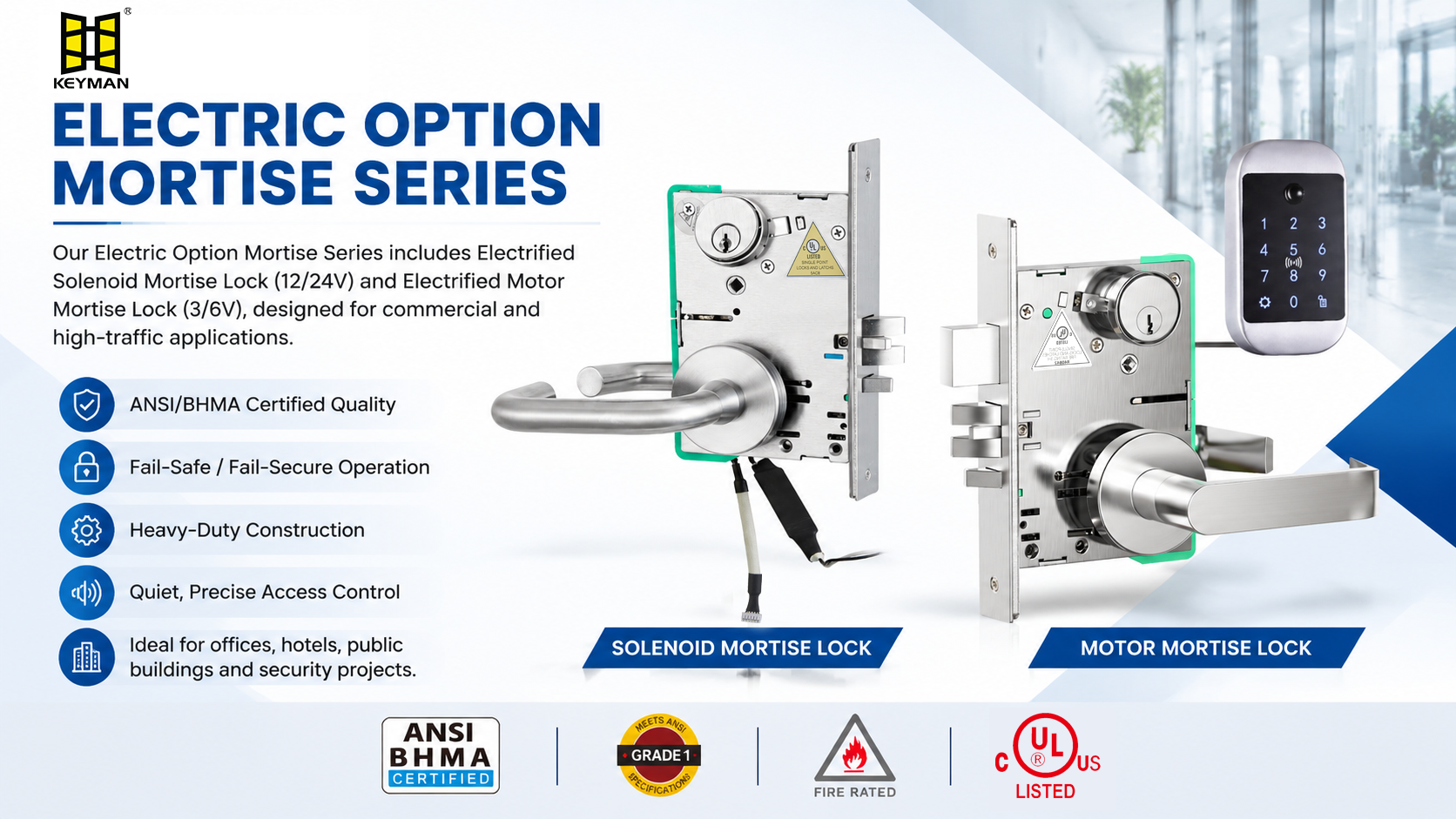
Keyman's Electric Option Mortise Series offers two electrified mortise lock solutions for commercial buildings: the Electrified Solenoid Mortise Lock (12/24V) and the Electrified Motor Mortise Lock (3/6V). Both are ANSI/BHMA certified, UL listed, and fire rated, making them suited for offices, hotels, and high-traffic public buildings that need reliable, code-compliant access control.
Choosing the right access control hardware for a commercial building isn't just about security. It's about matching the lock's power requirements, operation mode, and certifications to the specific demands of the door it protects. For facility managers, architects, and locksmiths specifying hardware for offices, hotels, or public buildings, an electrified mortise lock often solves problems that standard mechanical locks can't: remote control, integration with access control systems, and dependable performance under constant use.
Keyman's Electric Option Mortise Series was built around this exact need. It includes two distinct products — the Electrified Solenoid Mortise Lock and the Electrified Motor Mortise Lock — each designed for commercial and high-traffic applications where durability and precision matter as much as compliance.
What is an electrified mortise lock?
An electrified mortise lock is a door lock that combines the strength of a traditional mortise lock body with electronic control, allowing the lock to be operated remotely or integrated into a building's access control system. Unlike a standard mechanical mortise lock, an electrified mortise lock can be set to fail-safe or fail-secure operation, giving building owners flexibility over how doors behave during a power outage or emergency event.
This matters most in commercial settings: office buildings with centralized badge access, hotels managing hundreds of guest room entries, and public buildings that need to balance security with code-mandated emergency egress. Electrified mortise locks give these facilities a single hardware solution that handles both daily access control and life-safety requirements.
What's the difference between a solenoid and motor mortise lock?
The two products in Keyman's Electric Option Mortise Series are built around different actuation technologies, and the right choice depends on the voltage infrastructure and operational needs of the building.
Electrified Solenoid Mortise Lock (12/24V)
The Electrified Solenoid Mortise Lock operates on 12V or 24V power and uses a solenoid mechanism to control locking and unlocking. Solenoid-driven locks are known for fast actuation, making them a strong fit for doors where quick response time is a priority, such as entry points tied to card readers or keypads that need instant release.
Electrified Motor Mortise Lock (3/6V)
The Electrified Motor Mortise Lock runs on lower-voltage power (3V or 6V) and uses a motorized mechanism instead of a solenoid. Motor-driven mortise locks typically offer quieter, more controlled operation, which makes them well suited for environments like hotels and offices where noise during locking and unlocking is a consideration. In Keyman's lineup, this lock is also shown paired with a digital keypad, supporting standalone code-based entry in addition to networked access control.
Choose the Electrified Solenoid Mortise Lock if your building's infrastructure runs on 12/24V systems and your doors need rapid actuation. Choose the Electrified Motor Mortise Lock if you're working with a lower-voltage setup, want quieter operation, or need standalone keypad access without a full access control backbone.
What certifications do these locks carry?
Specifying hardware for commercial buildings almost always means meeting code and insurance requirements, and this is where certifications become non-negotiable. Both locks in Keyman's Electric Option Mortise Series carry the following:
ANSI/BHMA certified quality: Confirms the locks meet the American National Standards Institute and Builders Hardware Manufacturers Association performance benchmarks for commercial door hardware.
ANSI Grade 1 specifications: The highest commercial-grade rating for durability and security, appropriate for high-traffic entries.
Fire rated construction: Supports use on fire-rated door assemblies, a requirement in many commercial and public buildings.
UL listed (cULus): Independently tested and listed by UL for both the U.S. and Canadian markets.
Together, these certifications mean a facility manager or architect can specify the lock with confidence that it will pass inspection and satisfy both local building codes and insurance underwriting requirements.
Why choose fail-safe or fail-secure operation?
One of the defining features of an electrified mortise lock is the ability to configure it as fail-safe or fail-secure.
Fail-safe locks unlock automatically when power is lost, prioritizing emergency egress. This is often required on doors along designated fire escape routes.
Fail-secure locks remain locked when power is lost, prioritizing security over access. This is typically used on doors protecting sensitive areas like server rooms or executive offices.
Both the Electrified Solenoid Mortise Lock and Electrified Motor Mortise Lock support this configurability, giving specifiers the flexibility to match lock behavior to the specific risk profile of each door in a building.
Where are electrified mortise locks typically installed?
Electrified mortise locks are built for environments where doors see constant use and security can't be an afterthought. Common applications include:
Office buildings: Controlling access to floors, departments, or shared tenant spaces.
Hotels: Managing guest room and staff-only access with quiet, reliable operation.
Public buildings: Securing high-traffic entries like government offices, libraries, and schools while meeting fire and egress codes.
Security-focused projects: Any facility requiring integration with centralized access control or alarm systems.
Heavy-duty construction is a baseline requirement in these settings, since the hardware needs to withstand thousands of cycles without degrading in performance or precision.
Choosing the right electrified mortise lock for your project
Specifying an electrified mortise lock comes down to three practical questions: What voltage does your building's infrastructure support? Does the door need fast actuation or quiet operation? And what fail-safe or fail-secure configuration does the application require?
For buildings already wired for 12V or 24V systems with a priority on rapid response, the Electrified Solenoid Mortise Lock is the logical fit. For projects that call for lower voltage, quieter operation, or standalone keypad functionality, the Electrified Motor Mortise Lock is the better match. Both options deliver ANSI Grade 1, UL listed, fire-rated performance, so the decision ultimately comes down to matching the technology to the building's electrical setup and operational priorities.
If you're planning hardware for an upcoming commercial project, reach out to Keyman's team to discuss which configuration — solenoid or motor — best fits your door schedule and power infrastructure.
Frequently asked questions
What voltage do Keyman's electrified mortise locks require?
The Electrified Solenoid Mortise Lock operates on 12V or 24V, while the Electrified Motor Mortise Lock operates on 3V or 6V. The right choice depends on your building's existing electrical infrastructure.
Are these locks suitable for fire-rated doors?
Yes. Both the Electrified Solenoid Mortise Lock and Electrified Motor Mortise Lock are fire rated, making them appropriate for installation on fire-rated door assemblies in commercial buildings.
Can these locks be configured for fail-safe or fail-secure operation?
Yes. Both products support fail-safe and fail-secure configurations, allowing facility managers to match lock behavior to the security and egress needs of each door.
What's the main difference between the solenoid and motor versions?
The Electrified Solenoid Mortise Lock uses a solenoid mechanism for fast actuation at 12/24V, while the Electrified Motor Mortise Lock uses a motorized mechanism at 3/6V for quieter, more controlled operation. The motor version is also available paired with a digital keypad for standalone access.
What certifications should I look for when specifying an electrified mortise lock?
Look for ANSI/BHMA certification, ANSI Grade 1 rating, UL listing, and fire rating. Keyman's Electric Option Mortise Series meets all four, which supports code compliance and insurance requirements for commercial installations.


KEYMAN is Your Choice Of Security!
If you have any questions regarding our products or services, please leave your details and our team will respond to you.
: +86-13823964887
: +86-13823964887


