
Quick answer:
A mortise lock sits inside a pocket cut into the door edge and combines a latch, deadbolt, and trim in one durable unit, making it ideal for commercial, fire-rated, and high-traffic doors. A cylindrical lock is bored through the door face, offering faster, cheaper installation suited to light commercial and residential use. Choose a mortise lock when security, durability, and code compliance matter most.
Specifying the right door hardware isn't just about looks. It affects security, code compliance, and how a building performs over decades of daily use. Two of the most common options architects, contractors, and facility managers weigh against each other are mortise locks and cylindrical locks. Both secure a door. Both come in dozens of finishes and functions. But the way they're built—and where they belong—couldn't be more different.
This guide breaks down what separates a mortise lock from a cylindrical lock, where each one performs best, and how to decide which is right for your next project.
What Is a Cylindrical Lock?
A cylindrical lock, sometimes called a cylindrical lever lockset, is installed through two holes bored into the door: one through the face and one through the edge. The lock body sits inside the face-bore hole, while the latch mechanism sits in the edge-bore hole. This design, standardized under ANSI/BHMA A156.2, makes cylindrical locks quick to install and widely available across residential and light commercial markets.
Because the components are simpler, cylindrical locks tend to cost less upfront and can usually be swapped out without significant carpentry. They're common in offices, classrooms, and interior doors where security demands are moderate.
What Is a Mortise Lock?
A mortise lock is housed inside a rectangular pocket—the "mortise"—cut directly into the door edge, rather than bored through the face. The lock case contains the latch, deadbolt, and often additional locking points, all operated through a single cylinder and lever or knob trim.
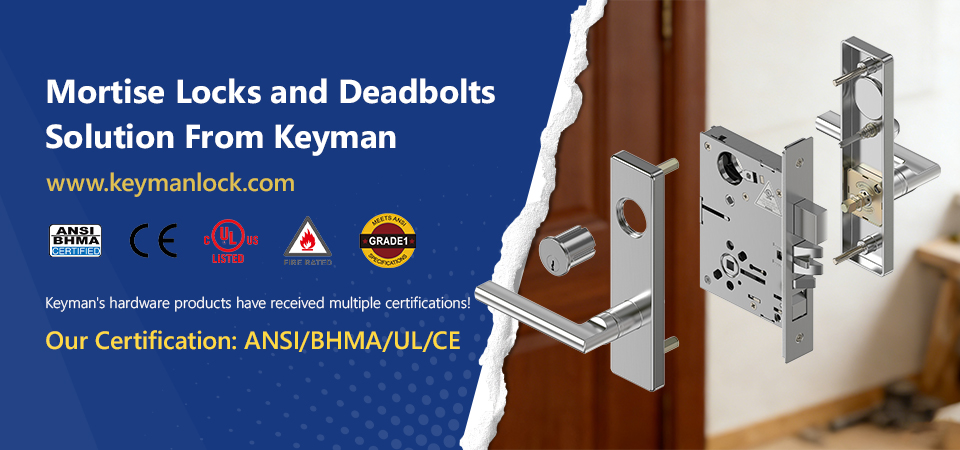
Mortise locks are typically manufactured to ANSI/BHMA A156.13 standards for mortise locks and latches, and many models, including Keyman's ANSI Grade 1 mortise locks, carry UL and CAN/ULC-S104 fire ratings up to three hours. That level of certification makes them a common requirement on fire-rated door assemblies in commercial buildings, hotels, and multifamily housing. For a deeper look at how these mechanisms function, see our complete guide to mortise locks.
Outside North America, Euro profile mortise locks built to EN 12209 standards serve a similar role, with fire ratings up to 4-1/3 hours in some configurations. Keyman's Euro profile mortise lock line is designed specifically for markets that require this standard.

Mortise Lock vs Cylindrical Lock: Key Differences
The clearest way to compare these two door lock types is side by side.
Feature | Mortise Lock | Cylindrical Lock |
Installation | Pocket cut into door edge; more labor-intensive | Bored holes through door face and edge; faster to install |
Durability | Heavy-duty steel case, built for high-traffic use | Lighter construction, suited to moderate use |
Security | Multi-point locking (latch + deadbolt), higher grade options | Single-point latch, generally lower security grade |
Fire Rating | Often UL/CAN rated up to 3+ hours | Limited fire-rated options |
Cost | Higher upfront cost | Lower upfront cost |
Typical Applications | Commercial buildings, hotels, fire-rated doors, high-traffic entries | Offices, schools, residential interior doors |
Installation and Labor
Cutting a mortise pocket takes more time and skill than boring two holes, which is why cylindrical locks dominate budget-conscious residential projects. Mortise locks require either factory-prepped doors or on-site machining, adding labor cost but resulting in a cleaner, more integrated fit.
Security and Durability
Because a mortise lock case houses the latch and deadbolt together, it distributes force across a larger internal mechanism. This construction generally holds up better against forced entry attempts and daily wear in high-traffic commercial settings. Cylindrical locks, while reliable for everyday use, are not typically built for the same load or security grade.
Code Compliance and Fire Ratings
Fire-rated door assemblies in commercial buildings often specify mortise locks because of their documented UL or CAN/ULC-S104 fire ratings. Architects working on hotels, hospitals, or multi-tenant buildings should confirm which lock type meets local fire code before finalizing hardware schedules.
Which Should You Choose?
Choose a cylindrical lock if the project involves interior doors with light traffic, a limited hardware budget, or fast turnaround installation—think classrooms, private offices, or residential bedrooms.
Choose a mortise lock if the door is an exterior entry, part of a fire-rated assembly, located in a high-traffic commercial space, or subject to strict security requirements—think hotel guest rooms, main building entrances, or stairwell doors in multifamily housing.
For projects that mix both needs, many facility managers standardize on mortise locks for main entries and fire-rated doors while using cylindrical locks for lower-risk interior spaces.
Making the Right Call for Your Project
Both mortise locks and cylindrical locks have earned their place in modern door hardware. The right choice comes down to how the door will be used, what code requirements apply, and how much long-term durability the project demands.
If your project involves fire-rated doors, high-traffic commercial entries, or strict security standards, a certified mortise lock is generally the safer investment. Explore Keyman's ANSI Grade 1 mortise lock and Euro profile mortise lock lines, or reach out to the Keyman team for a hardware consultation tailored to your building's requirements.
Frequently Asked Questions
Is a mortise lock more secure than a cylindrical lock?
Generally, yes. A mortise lock combines a latch and deadbolt in one heavy-duty case, giving it multi-point locking capability that most cylindrical locks lack.
Are mortise locks more expensive to install?
Yes. Cutting a mortise pocket into the door edge requires more labor than boring holes for a cylindrical lock, which raises installation costs.
Can cylindrical locks be used on fire-rated doors?
Some cylindrical locks carry fire ratings, but options are limited compared to mortise locks, which are widely manufactured to meet UL and CAN/ULC-S104 fire standards.
What's a common use case for cylindrical locks?
Cylindrical locks are typically used on interior doors with moderate traffic, such as offices, classrooms, and residential bedrooms, where fast installation and lower cost matter more than heavy-duty security.
Do mortise locks require special maintenance?
Mortise locks are built for durability, but like any hardware, they benefit from periodic lubrication and inspection of the cylinder and strike plate to keep the mechanism operating smoothly.


KEYMAN is Your Choice Of Security!
If you have any questions regarding our products or services, please leave your details and our team will respond to you.
: +86-13823964887
: +86-13823964887


