
Quick answer:
Automatic flush bolts are better for most fire-rated double doors because they self-latch when the active leaf closes, ensuring the inactive leaf is always secured without relying on staff to remember a manual step. Manual flush bolts work well for low-traffic doors where occasional operation is acceptable. Both options need a UL10C flush bolt rating to meet fire-door code requirements.
Fire-rated double doors depend on more than just the leaf itself. The inactive leaf—the one that stays closed most of the time—needs a reliable method to stay secured to the frame or the other door, and that's where flush bolts come in. Get this component wrong, and you risk code violations, failed inspections, or worse: a door that doesn't perform as expected during a fire.
Choosing between an Automatic Flush Bolt and a Manual Flush Bolt isn't just a matter of preference. It affects daily usability, maintenance demands, and whether your door assembly consistently meets fire code. This guide breaks down how each type works, where they fit best, and what to look for when specifying flush bolts for fire-rated openings.
What Is a Flush Bolt, and Why Does It Matter for Fire-Rated Doors?
A flush bolt is a hardware component installed into the edge of a door leaf, typically the inactive leaf of a pair, that extends into the frame header or threshold to hold the door in a closed and secured position. The bolt sits flush with the door edge when retracted, which is where the name comes from.
On fire-rated double doors, flush bolts aren't optional extras. Building codes require the inactive leaf of a pair of fire doors to be secured independently so the active leaf can latch into a stable, fixed point. Without a properly functioning flush bolt, the door assembly may fail to maintain its fire-resistance rating during an actual fire event, since gaps or unsecured leaves allow smoke and flame to pass through.
This is why flush bolts on fire-rated doors must carry a UL10C flush bolt rating. UL10C testing evaluates hardware performance under the specific conditions of a positive-pressure fire test, which is the standard most U.S. and Canadian fire codes reference for door assemblies. Choosing hardware without this certification can compromise the entire door's listed fire rating, regardless of how well the door and frame were installed.
How Does an Automatic Flush Bolt Work?
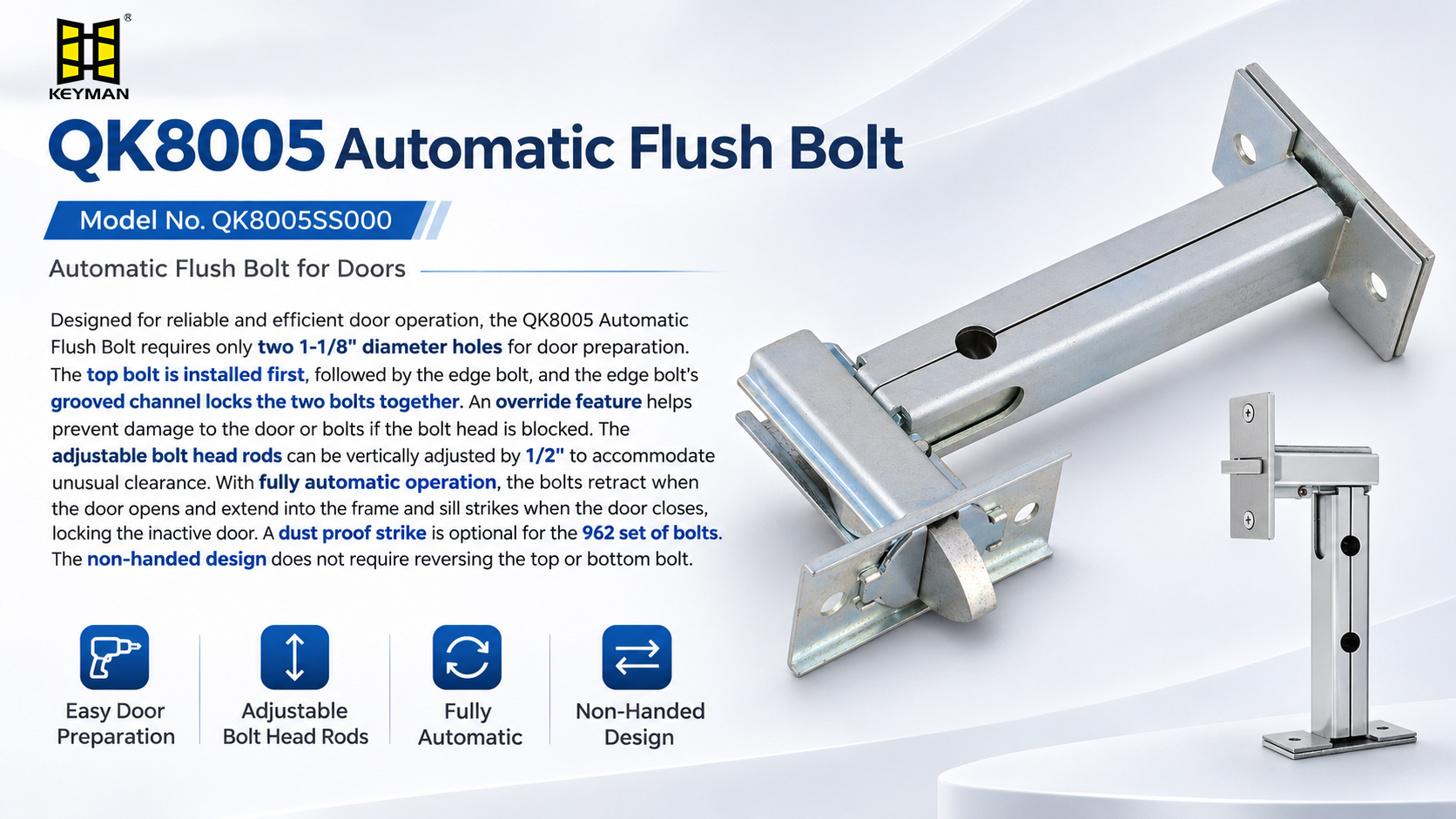
An Automatic Flush Bolt is designed to engage on its own. When the inactive leaf is closed and the active leaf swings shut afterward, the mechanism in the automatic flush bolt senses that closure and extends the bolt into the frame automatically. There's no lever to throw, no separate action required from the person closing the door.
This self-actuating design solves a common real-world problem: people forget to manually secure doors, especially in busy environments like hospitals, schools, or commercial buildings with heavy foot traffic. An Automatic Flush Bolt removes that human factor entirely.
Where Automatic Flush Bolts Make the Most Sense
Automatic Flush Bolts are the better fit for high-traffic fire-rated double doors, especially in commercial, healthcare, and educational facilities where doors are used dozens or hundreds of times a day. Choose an automatic flush bolt if consistent, code-compliant closure matters more than minimizing hardware cost, since the automatic function reduces the risk of a door failing inspection due to an inactive leaf left unsecured.
They're also well-suited to doors that see frequent staff turnover or visitor use, where relying on someone to remember a manual bolt-throw step introduces too much risk.
How Does a Manual Flush Bolt Work?
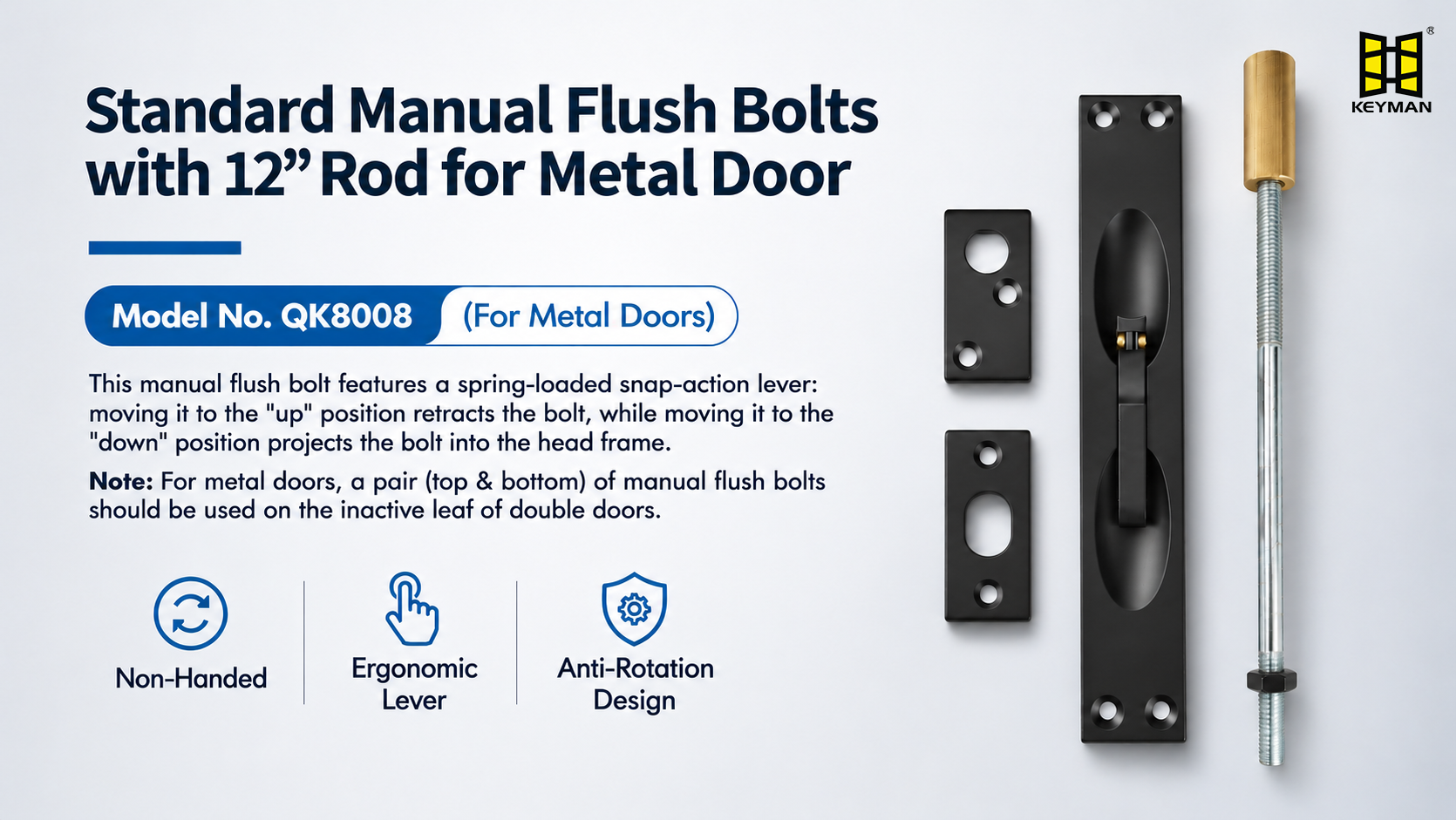
A Manual Flush Bolt requires physical action to engage. The person closing the door has to manually throw the bolt, usually by sliding or flipping a lever at the top and/or bottom of the door edge, to extend it into the frame or floor socket.
This hands-on operation means the inactive leaf will only be secured if someone actually performs the step. In a facility where doors are used infrequently or where the same trained staff handle opening and closing procedures, this isn't necessarily a problem.
Where Manual Flush Bolts Make the Most Sense
Manual Flush Bolts work well for low-traffic fire-rated doors, such as storage rooms, mechanical closets, or back-of-house areas where a limited, trained group of people interacts with the door. Choose a manual flush bolt if the opening sees infrequent use and budget is a bigger priority than automated convenience, since manual hardware is generally simpler in construction and lower in upfront cost.
They can also be a practical choice for doors that are rarely both open simultaneously, where the inactive leaf stays closed for extended periods and doesn't need the same level of automated reliability.
Automatic vs Manual Flush Bolt: Key Differences at a Glance
Factor | Automatic Flush Bolt | Manual Flush Bolt |
|---|---|---|
Operation | Self-engages when active leaf closes | Requires manual action to engage |
Best for | High-traffic fire-rated doors | Low-traffic, infrequently used doors |
Risk of human error | Low | Higher, depends on consistent use |
Typical cost | Higher due to added mechanism | Lower, simpler construction |
Maintenance | Slightly more complex mechanism | Fewer moving parts to service |
Code compliance consistency | More reliable across daily use | Depends on correct manual operation |
What Should You Check Before Specifying Either Option?
Regardless of which type you choose, a few requirements apply to both:
UL10C fire rating. Confirm the flush bolt is tested and listed under UL10C, matching the fire-resistance rating of the door assembly itself (commonly 60, 90, or 180 minutes). A mismatch between door rating and hardware rating can void the listing.
Door thickness and bolt length compatibility. Flush bolts come in different rod lengths and are sized for specific door heights and thicknesses. Verify the flush bolt specification matches your door leaf dimensions.
Coordinator compatibility. On pairs of fire-rated doors, a door coordinator is often required to ensure the inactive leaf closes and secures before the active leaf, particularly important with Manual Flush Bolts, where timing can affect whether the bolt engages correctly.
Maintenance access. Automatic Flush Bolts have more internal components, so confirm the hardware allows for straightforward inspection and servicing without removing the entire door leaf.
Making the Right Choice for Your Fire-Rated Door Assembly
The decision between an Automatic Flush Bolt and a Manual Flush Bolt comes down to how the door is used day to day. High-traffic commercial and institutional doors benefit from the consistency of automatic operation, where the mechanism removes the chance of human error. Lower-traffic doors with controlled access can perform reliably with manual hardware at a lower cost.
Whichever option fits your project, confirm the hardware carries a valid UL10C flush bolt listing and matches the fire rating of the door assembly. That certification isn't a formality. It's what keeps your fire-rated double doors performing as designed when it matters most.
Keyman Lock manufactures ANSI and UL-listed door hardware, including flush bolts engineered for fire-rated openings. If you're specifying hardware for an upcoming project, reach out to the Keyman Lock team to discuss which flush bolt configuration fits your door assembly.
Frequently Asked Questions
What does UL10C mean for flush bolts?
UL10C is a fire-test standard that evaluates how door hardware performs under positive-pressure fire conditions. A UL10C flush bolt has been tested to confirm it maintains its function and doesn't compromise the door's fire rating during a fire event, making it a requirement for most fire-rated door assemblies in the U.S. and Canada.
Can I use a Manual Flush Bolt on a high-traffic fire door?
It's possible, but not recommended. High-traffic fire doors rely on consistent, repeated closure throughout the day, and a Manual Flush Bolt depends on someone remembering to engage it every time. An Automatic Flush Bolt removes that risk by securing the inactive leaf without manual input.
Do both leaves of a fire-rated double door need a flush bolt?
Typically, only the inactive leaf requires a flush bolt. The active leaf usually has a separate latch or lock that secures into the frame or into the inactive leaf once it's bolted in place.
How much more does an Automatic Flush Bolt cost compared to a Manual Flush Bolt?
Automatic Flush Bolts generally cost more upfront due to the added mechanism that enables self-engagement. The price difference varies by manufacturer and door specification, so it's worth requesting a quote based on your exact door assembly.
Is a coordinator required with flush bolts on fire-rated doors?
In many cases, yes. A door coordinator ensures the inactive leaf closes and secures before the active leaf swings shut, which is especially important for proper flush bolt engagement and overall fire door code compliance.


KEYMAN is Your Choice Of Security!
If you have any questions regarding our products or services, please leave your details and our team will respond to you.
: +86-13823964887
: +86-13823964887


