
Security technology has come a long way from simple deadbolts and key-operated cylinders. Facilities managers, architects, and building owners are increasingly turning to electrified mortise lock systems to meet the growing demands of modern access control. The Euro electrified mortise lock sits at the center of this shift—combining the robustness of traditional mortise locksets with the flexibility and intelligence of electronic operation.
This post breaks down exactly what a Euro electrified mortise lock is, how it works, why it outperforms conventional alternatives, and what to look for when selecting one for your next project.
What Is a Euro Electrified Mortise Lock?
A mortise lock is a lock that fits into a pocket—called a mortise—cut into the edge of a door. Unlike cylindrical locks, which are surface-mounted, mortise locksets sit flush within the door itself. This makes them stronger, more tamper-resistant, and far better suited for high-traffic or high-security environments.
A Euro electrified mortise lock takes this one step further. It incorporates an electrical actuator—typically a solenoid—that allows the lock to be operated remotely. This means doors can be locked or unlocked via access control panels, card readers, keypads, or building management systems without any physical interaction with the hardware.
The "Euro" designation refers to the EN standard profile format, which is the dominant lock format across Europe and increasingly adopted in commercial buildings worldwide. Euro profile mortise locksets follow specific dimensional standards—72mm centers, with backsets typically available at 55mm, 60mm, or 65mm—making them compatible with a wide range of door configurations.
How Does a Solenoid-Based Electrified Mortise Lock Work?
The solenoid version of the Euro electrified mortise lock uses an electromagnetic actuator to control the locking mechanism. When an electrical signal is sent to the solenoid, it either engages or disengages the latch bolt, allowing entry or exit based on the access control instruction.
One particularly important feature of this mechanism is automatic relocking. When the door closes after an authorized entry, the lock re-engages automatically—no manual intervention required. This is critical in environments where security must be maintained continuously, such as office buildings, hospitals, and residential apartment complexes.
The latch bolt itself can be operated either by lever handle or by key, giving users multiple modes of control depending on the situation. This flexibility makes solenoid-based electrified mortise lock systems suitable for a broad range of applications, from secure server rooms to shared commercial entrances.
Key Features to Look for in a Euro Electrified Mortise Lock
Not all electrified mortise lock products are built the same. When evaluating options, the following specifications matter most:
Backset and Dimensional Compatibility
Standard Euro profile mortise locksets come in 55mm, 60mm, and 65mm backsets, with 72mm centers. These dimensions ensure compatibility with standard Euro profile cylinders and the majority of commercial door frames. Always confirm the backset before specifying a lock for a particular door.
Material and Durability
For longevity and corrosion resistance, look for locks constructed with SS 304 (Grade 304 stainless steel) components—including the forend, strike plate, follower, and latch bolt. Stainless steel hardware withstands heavy use and harsh environmental conditions far better than zinc alloy or low-grade alternatives.
Cycle Testing and Grade Certification
A lock tested to Grade X with 200,000 cycles means it has been verified to perform reliably under sustained, heavy use. This kind of certification is essential for commercial installations where doors may open and close hundreds of times per day.
Forend and Strike Plate Options
Both square and radius forend and strike plate options are typically available for Euro mortise locksets. Choosing the right profile ensures a clean, flush fit with the door and frame, which is both aesthetically important and functionally necessary for long-term performance.
Furniture and Escutcheon Compatibility
A quality electrified mortise lock should be pierced to accept bolt-through furniture and escutcheons at 38mm centers. This ensures compatibility with a wide range of lever handles, trim, and cylinder accessories.
Escape Route Compliance
For buildings subject to fire safety or emergency egress regulations, the lock must support single-action escape. This means occupants can exit with a single movement—typically pushing down a lever—without needing a key or code. The door then automatically relocks upon closing, preserving security without compromising safety compliance.

Where Euro Electrified Mortise Locks Are Used
The versatility of the electrified mortise lock makes it a strong fit across many building types:
Commercial offices — Integration with card-based access control allows granular control over which employees can access which areas, and at what times.
Residential apartment buildings — Centralized management of building entrances and common areas becomes far more practical with remote locking capability.
Healthcare facilities — Controlled access to restricted zones like pharmacies, data rooms, or patient wards can be managed electronically without sacrificing emergency egress requirements.
Hotels — Euro mortise locksets are a natural fit for hotel door systems, where guest access management and front desk override capability are both required.
Educational institutions — Schools and universities benefit from the ability to lock down or open sections of a building quickly in response to security events.
1
Integrating the Electrified Mortise Lock Into an Access Control System
One of the main advantages of a solenoid-driven electrified mortise lock over a standard mechanical lock is its ability to connect to broader building systems. Most modern installations tie the lock into an access control panel, which may itself be linked to time-scheduling software, alarm systems, and remote monitoring dashboards.
This integration produces a more responsive and manageable security environment. Access logs can be generated automatically, showing exactly who entered or exited and when. Permissions can be adjusted in real time without rekeying the lock. And in the event of a security alert, doors can be locked or released across an entire building from a single point of control.
For new builds and major retrofits, specifying an electrified mortise lock at the design stage is far simpler than retrofitting electronics into mechanical hardware later. It also ensures that the door and frame are properly prepared for cable routing—an often-overlooked practical consideration.
Choosing the Right Supplier for Mortise Locksets
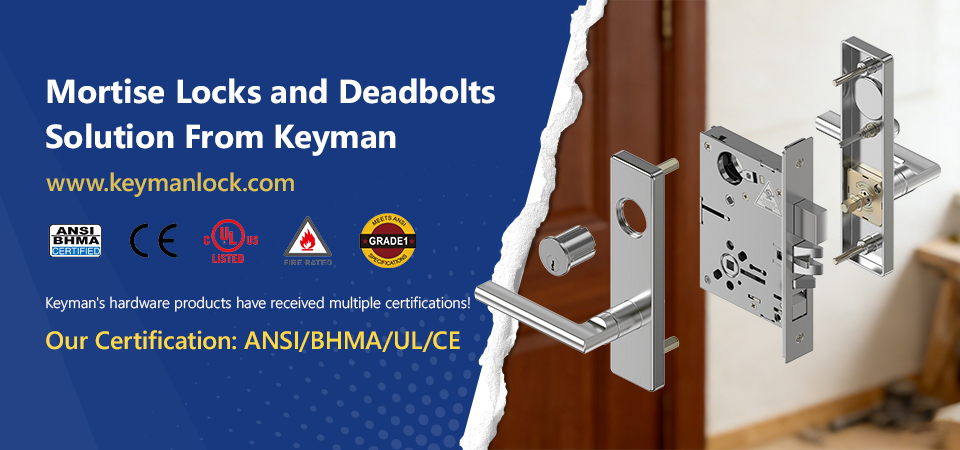
Selecting a reputable manufacturer for mortise locksets is just as important as choosing the right product specification. Look for suppliers with verifiable certification credentials—CE marking for the European market, ANSI/BHMA compliance for North American projects, and UL listing for fire-rated door applications.
Keyman Lock, established in 1996, manufactures Euro profile mortise locksets including the electrified solenoid version (M5G0) to EN 12209 Grade 3 standards. Their Euro electrified mortise lock is designed specifically for integration into modern access control systems, meeting the dimensional and operational requirements outlined above.
When vetting any supplier, confirm that their products carry independent third-party certifications, that cycle-testing data is available on request, and that technical support is accessible throughout the specification and installation process.
The Euro Electrified Mortise Lock Is a Smart Long-Term Investment
Mechanical locks serve a purpose, but they have clear limitations in environments that demand flexibility, auditability, and remote management. The Euro electrified mortise lock addresses all three. It delivers the structural integrity of a properly installed mortise lockset with the operational advantages of electronic access control—all within a standardized Euro profile format that works with existing door hardware.
For anyone specifying door hardware for a commercial, multi-residential, or institutional project, the electrified mortise lock deserves serious consideration. The upfront cost is higher than a standard mechanical lock, but the long-term gains in security management, compliance, and operational efficiency make the investment a straightforward one.
Euro Electrified Mortise Lock
mortise locksets
electrified mortise lock


KEYMAN is Your Choice Of Security!
If you have any questions regarding our products or services, please leave your details and our team will respond to you.
: +86-13823964887
: +86-13823964887


