
Quick answer:
A rim exit device mounts to the surface of the door and suits doors without a mortise lock pocket—such as glass doors, decorative doors, and lighter-traffic entries—while a mortise exit device is recessed into the door edge and delivers higher security, making it the better fit for high-traffic areas like school corridors and hospital hallways. Choosing between a rim exit device vs. mortise exit device comes down to your door's construction, the security level you need, and how much foot traffic the opening handles daily.
Below, we break down the structural differences, security comparison, and application scenarios to help you navigate this exit device selection guide with confidence.
What's the Structural Difference Between Rim and Mortise Exit Devices?
A rim exit device is surface-mounted to the interior face of the door, with the latch bolt engaging a strike plate mounted on the frame. Because it doesn't require cutting a pocket into the door, it's a straightforward retrofit for doors that lack a mortise lock preparation—including many glass doors and decorative doors where structural modification isn't practical.
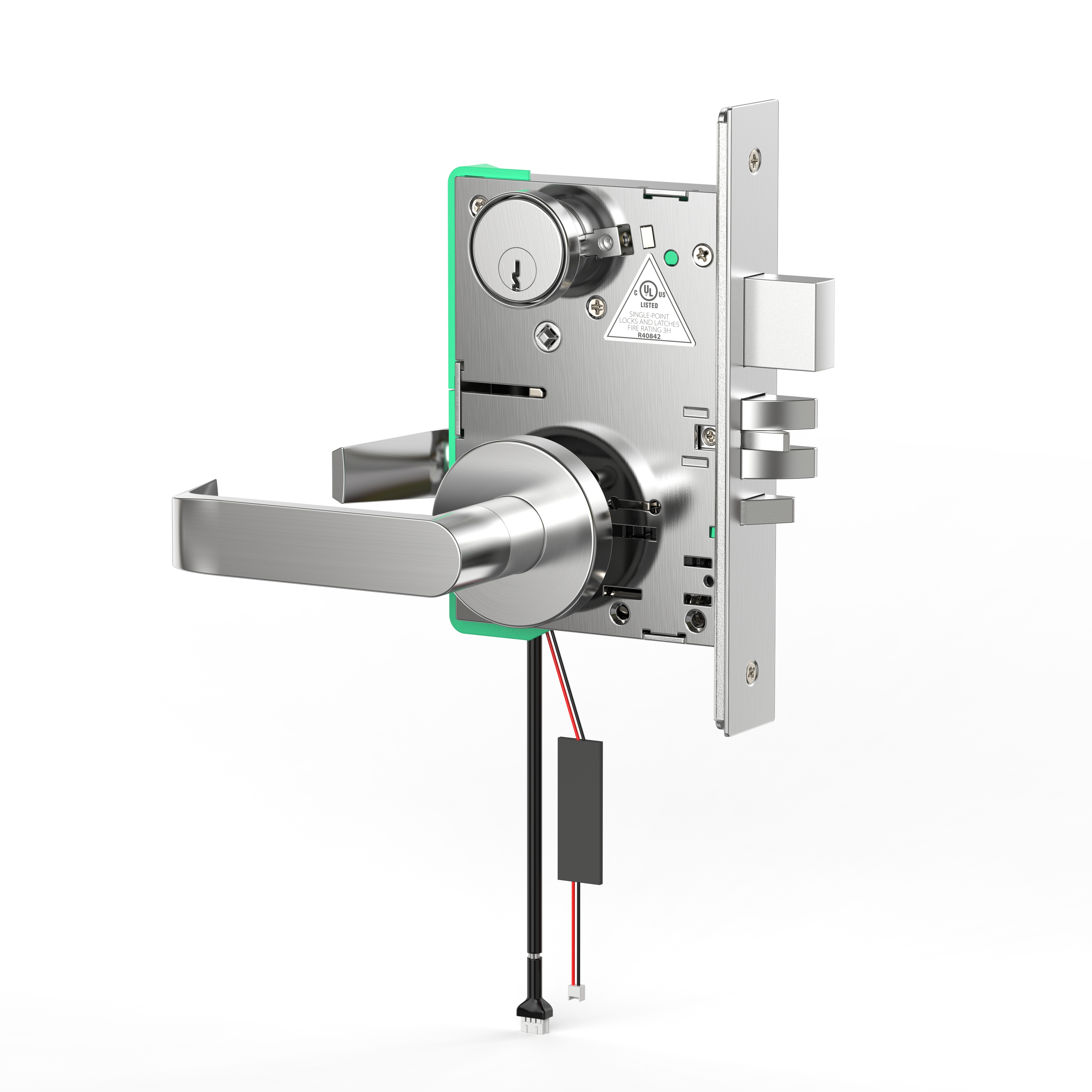
A mortise exit device, by contrast, is installed into a pocket (or "mortise") machined into the door's edge. The device body sits inside the door itself, with only the push bar and trim visible on the surface. This embedded construction requires more precise door preparation but results in a more robust, tamper-resistant mechanism.
Feature | Rim Exit Device | Mortise Exit Device |
|---|---|---|
Mounting | Surface-mounted on door face | Recessed into door edge |
Door Prep Required | Minimal | Extensive (mortise pocket) |
Best Suited For | Glass doors, decorative doors, doors without mortise locks | High-security, high-traffic commercial doors |
Security Level | Standard | Higher |
Why Is a Mortise Exit Device Better Suited for High-Security Applications?
Mortise exit devices offer stronger resistance to forced entry because the locking mechanism is embedded within the door itself, rather than attached to its surface. This recessed construction makes the device harder to pry, tamper with, or dislodge—an important consideration for doors that see heavy daily use or require a higher security rating.
Facilities that handle sensitive access control—such as hospital corridors, school main entrances, and government buildings—typically specify mortise exit devices for this reason. The added installation complexity is a worthwhile trade-off when the opening demands durability and resistance to wear from constant cycling.

When Should You Choose a Rim Exit Device Over a Mortise Exit Device?
Rim exit devices are the practical choice when the door doesn't have (or can't accommodate) a mortise lock pocket. This includes:
Glass doors: Storefronts and lobby entrances often use glass doors that can't be routed for a mortise mechanism, making rim-mounted hardware the standard solution.
Decorative doors: Doors with ornamental panels or thin profiles may not have enough material depth for a mortise installation.
Lower-traffic or retrofit applications: When replacing existing panic hardware without modifying the door, a rim exit device offers a faster, less invasive installation.
In short, rim exit device vs. mortise exit device decisions often come down to what the door can physically support, not just what level of security is ideal.
Which Exit Device Fits Your Application Scenario?
Use this quick-reference matrix to match commercial exit device types to common door applications:
Glass doors / storefront entrances → Rim exit device
Decorative or ornamental doors → Rim exit device
School main corridors and classroom doors → Mortise exit device
Hospital hallways and patient-area doors → Mortise exit device
Government or high-security facility entrances → Mortise exit device
How Does Keyman's Product Line Map to These Exit Device Types?
Keyman offers both exit device types to cover the full range of commercial door applications:
X8 Aluminum Exit Device Series: A rim-mounted, UL-listed, ANSI Grade 1 panic exit device built to ANSI/BHMA A156.3 standards, with UL 10C & ULC-S104 fire ratings up to 3 hours. It's suited for doors that call for a surface-mounted solution without compromising on code compliance.
X9 Stainless Steel Exit Device Series: Also rim-mounted and UL-listed to ANSI Grade 1, offering the same fire-rated, panic-hardware-compliant performance in a stainless steel build for higher-corrosion or higher-durability environments.
Mortise exit device options: For applications requiring embedded, high-security hardware, Keyman's mortise-style exit devices pair with its ANSI Grade 1 Mortise Lock (M7 Series) platform, which meets ANSI/BHMA A156.13 and carries a 3-hour fire rating under ANSI/UL 10C & CAN/ULC-S104.
Matching the right series to your door type and traffic level ensures the opening meets both code requirements and real-world durability expectations.
Frequently Asked Questions
Can a rim exit device be upgraded to a mortise exit device later?
Generally, no—because a mortise installation requires a pocket machined into the door edge during manufacturing or retrofit, switching from rim to mortise typically means replacing the door or having it re-prepped, not just swapping the hardware.
Do rim exit devices meet the same fire ratings as mortise exit devices?
Yes, in Keyman's lineup, both the rim-mounted X8 and X9 series and the mortise lock platform carry 3-hour fire ratings under ANSI/UL 10C and CAN/ULC-S104, so fire rating isn't a deciding factor between the two types.
Is a mortise exit device more expensive to install than a rim exit device?
Typically yes, because mortise installation requires precise door preparation and more labor, while rim exit devices install directly onto the door surface with minimal modification.
What standard governs exit device panic hardware performance?
In the U.S., exit devices are tested to ANSI/BHMA A156.3 for panic hardware performance, with UL 305 covering fire-exit hardware listing—both rim and mortise devices should meet these standards for commercial use.


KEYMAN is Your Choice Of Security!
If you have any questions regarding our products or services, please leave your details and our team will respond to you.
: +86-13823964887
: +86-13823964887


